Protecting Habitats & Harvests
Our vibrant farmlands fuel our local economy and preserve the scenic, rural beauty that defines Skagit County. But their value doesn’t stop there. These lands also provide critical biodiversity—such as resting and feeding grounds for thousands of waterfowl including the iconic wintering swans and snow geese. Few land types can claim such a unique overlap of supporting our human livelihoods while playing an important role in biodiversity. Our life support system needs both. Finding the right balance between the two isn’t always easy, but it’s vital.
Skagit Land Trust (SLT or the Trust) has conserved over 1,000 acres of farmland across 13 properties. Our focus is primarily on multi-purpose agricultural lands—the places where farming meets habitat conservation. These lands may host wetlands or sloughs, or they might be farmland that is not ideal for intensive production but is perfect for a mix of agriculture and fish and wildlife habitat. Increasingly, landowners also are looking to restore parts of their property for nature—especially as climate change and sea-level rise shift the landscape. We focus on this niche because Skagit County already has a strong county-run program that purchases development rights to ensure that high-value agricultural land stays in farming, not pavement.
Samish-Edison Conservation Easement

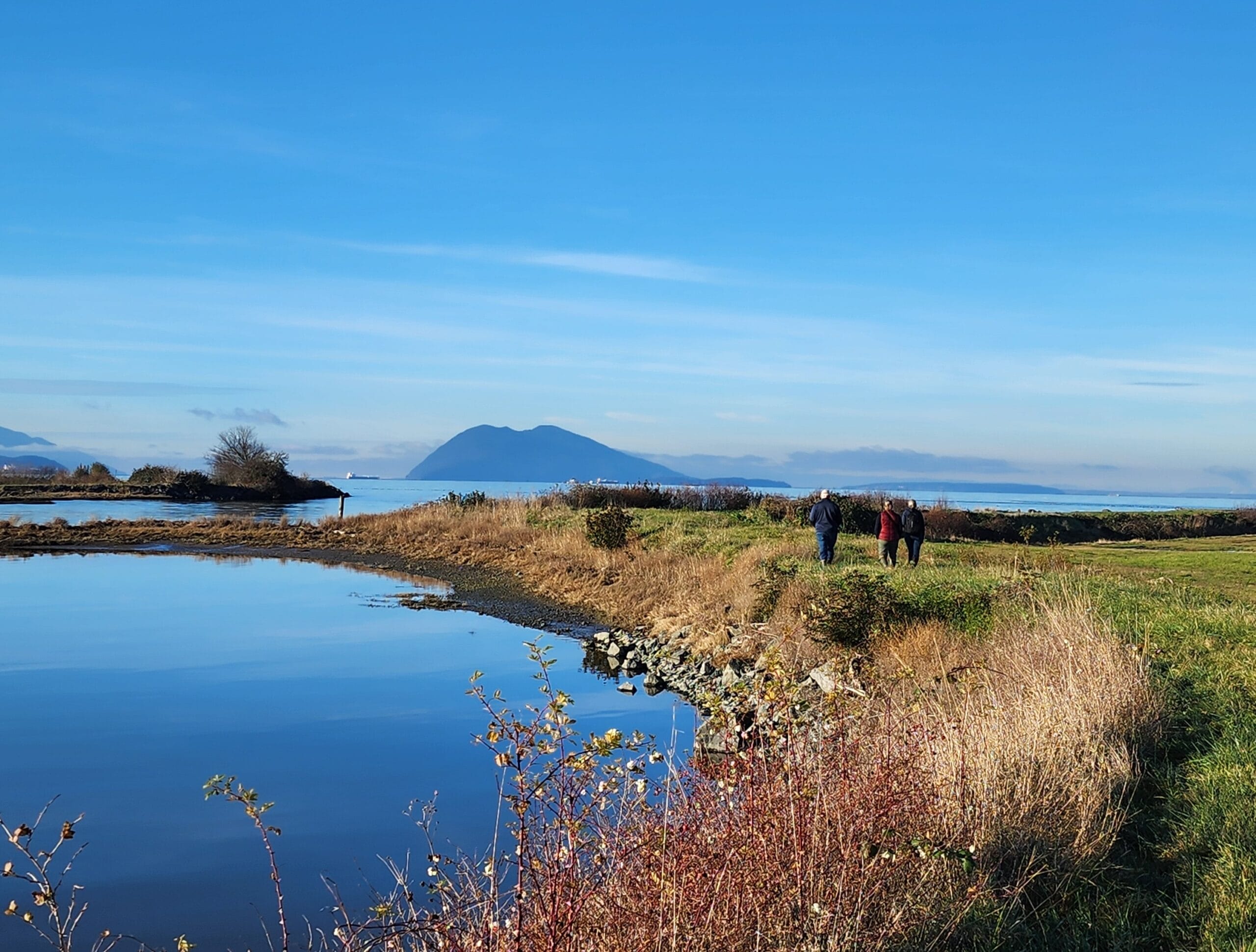
One of Skagit Land Trust’s newly protected agricultural properties lies where Edison Slough meets Samish Bay. In the growing season, most of the 120+ acres are farmed. Come winter, the area transforms into a haven for an array of birds, from gleaming trumpeter swans to keen-eyed raptors and plucky plovers. The longtime landowners, who live on the property and lease over 100 acres to a local farming family, approached the Trust with a vision. They wanted to protect the farmland, open space, and 1.4 miles of shoreline forever, while also allowing it to adapt as nature might require due to sea-level rise.
The Paul Farm on Fir Island

On Fir Island, just half a mile from the north fork of the Skagit River as it spreads across the Skagit Delta, sits the 26-acre Paul Farm which was recently left in a will to the Trust. Snow geese and trumpeter swans frequent the farm, adding to the scenic quality of the valley’s landscape. Previous owner Cornelia Paul and her son Leo’s fondness for nature and healthy soils influenced the family’s decision to donate the land. Above all, they wanted the land protected from anything that they felt would deplete the soil.
Birdsview Conservation Easement Offers Grazing for Farm Animals and Wildlife
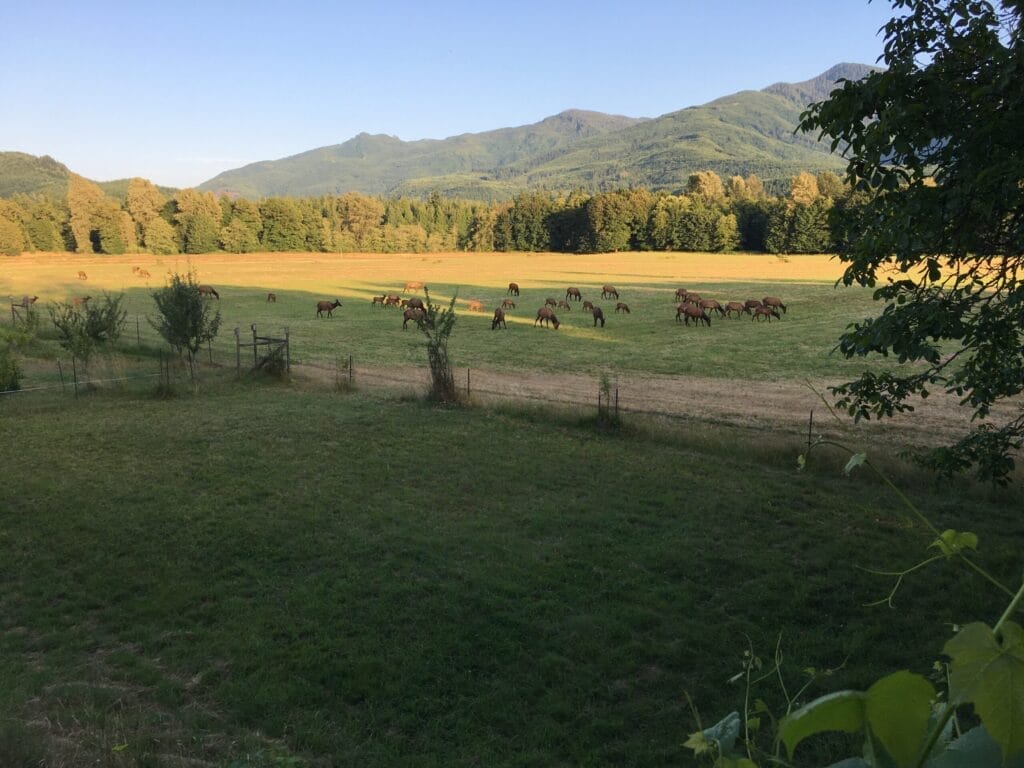
Farther up the Skagit, the 250-acre Elysium/Birdsview Conservation Easements protect 115 acres of farmland. This land also serves as a key wildlife corridor, allowing animals to move freely between the Skagit River ecosystem and the forested foothills. For some animals it is a seasonal stopover; for others, a safe passageway. This wildlife corridor ensures that species will not be cut off from these essential needs by development.
Birdsview’s landowners recognize the importance of maintaining agricultural land and open space in the Skagit landscape. They share their grass with the wildlife, providing food for elk and other wildlife while reducing grazing impacts on other farms. “We want to produce high-quality hay, not just for farm animals, but because good grassland, protected forest, and water access combine to make functional wildlife habitat,” explain the landowners.

From the Cascades to the Salish Sea, Skagit Land Trust is working with partners and landowners to protect Skagit’s farmland and prime soils. Together, we are helping to safeguard places where agriculture, fish, and wildlife coexist and thrive.


