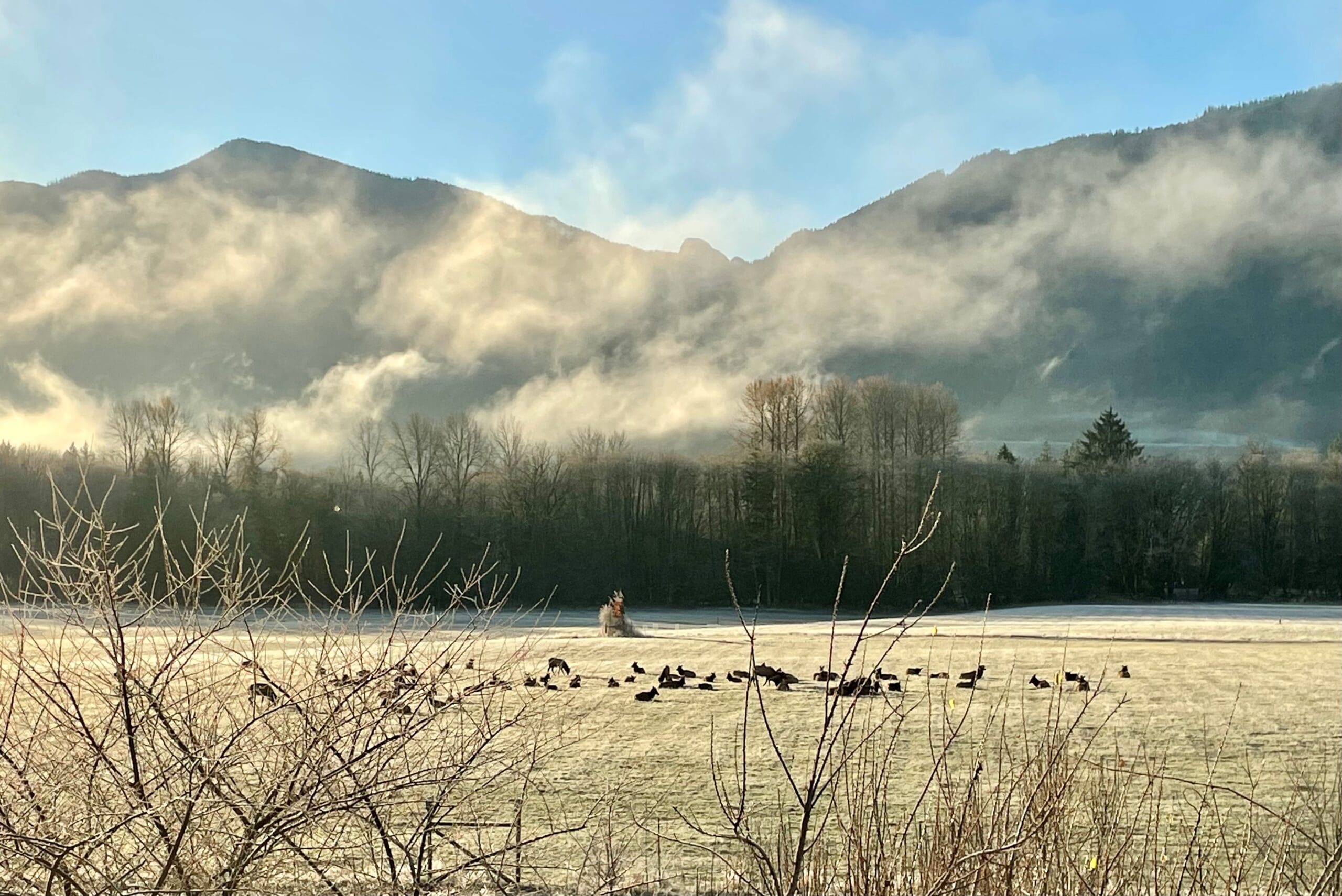
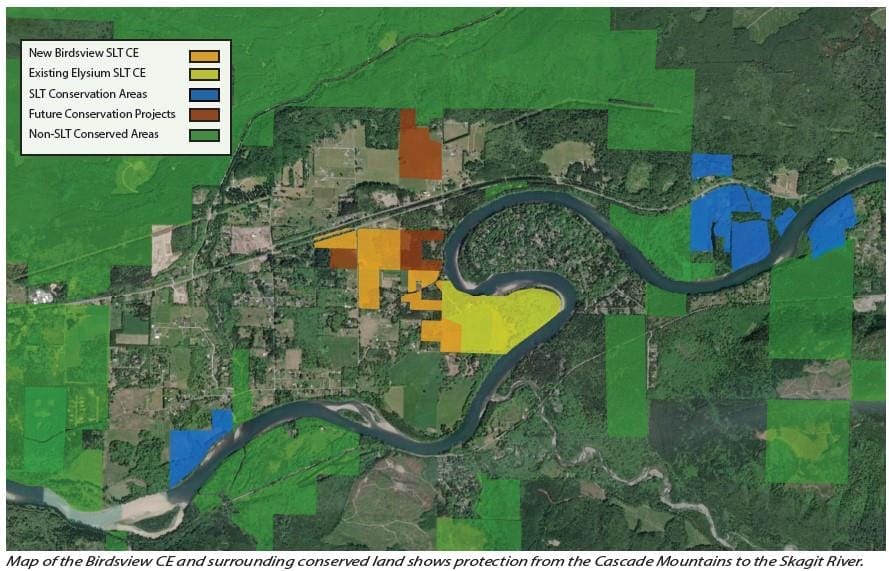
This large conservation easement contributes to a vision shared by the landowners and Skagit Land Trust: the creation of wildlife corridors that will help to safeguard species diversity for wildlife in Skagit County and beyond. “I love seeing the elk of the Skagit Valley accessing their historic range,” says SLT’s Conservation Director Michael Kirshenbaum. “But elk are just the most visible species that benefit from having protected areas in key locations throughout the watershed. Along with the elk, countless other species can thrive in these conserved areas.”
Moving freely across interconnected habitat enables wildlife to access a sufficiently large gene pool, evade predators, and migrate. As climate conditions fluctuate more extremely, wild animals also need to be able to expand, contract, and move across land. However, human infrastructure converts natural landscapes and fragments habitat. While the Skagit is relatively green and undeveloped when compared with some other places, the cumulative impact of our human activities has undermined the ecological connectivity that supports diverse wildlife and plant species.
Knowing all this, the owners of the Birdsview CE land have partnered with Skagit Land Trust and others to protect strategic wildlife corridors through which animals can continue to access their natural range. By maintaining and restoring open space and native vegetation, the landowners have further enhanced wildlife habitat and land connectivity. These corridors function as lifelines, providing areas where animals can graze and pass through in peace, away from areas where they are less welcome. By doing so, these protected areas can benefit people also by lessening conflicts between wildlife and other interests.
Often, large areas of these wildlife-corridor jigsaw puzzles don’t qualify for state and federal grants (for example, those not directly on the river). Here is where individuals and organizations like Skagit Land Trust can step in with a vision to stitch the environment back together over time.
We all live in environments that are fragmented. However, through this permanent conservation easement and other partnerships like it, we can protect wildlife corridors that rebuild and sustain healthy wildlife and plant populations in the Skagit. With time and thoughtful care, our community can save existing lands and regain seemingly lost lands as safe havens for wildlife. In the face of rapid land and climate change, rewilding such places is essential to preserving biodiversity in the Skagit for all generations.