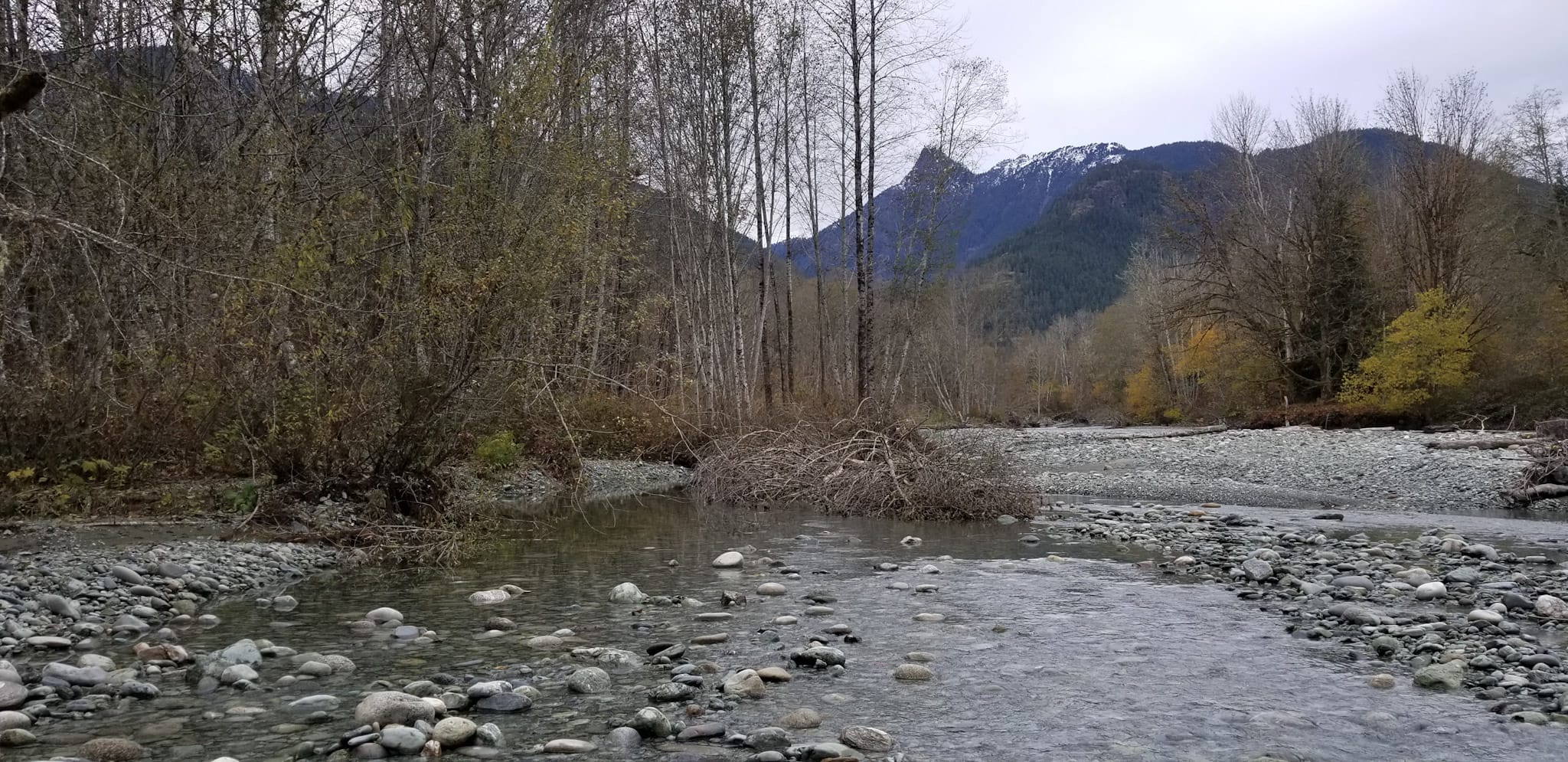
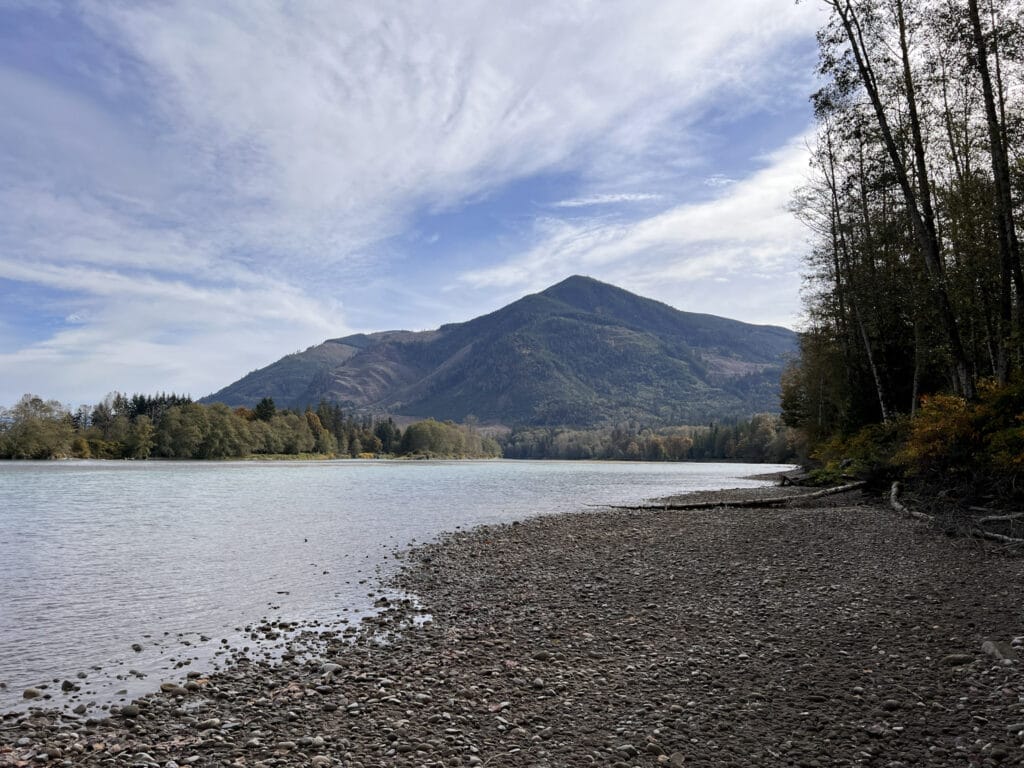
Unarmored shorelines also maintain openings to sloughs, connections to back channels and the natural creation of pocket habitats on the river for native fish spawning and rearing. Other native fish species benefit from these natural processes including, coho, chum, pink, and sockeye – and two species of trout: steelhead and coastal cutthroat. The Skagit is the only large river system in Washington that contains healthy populations of all five native salmon species. The benefit of protecting salmon habitat does not end with fish. The Skagit River is one of Puget Sound’s most important rivers for resident orca whales due to the chinook salmon they depend on. Protecting these lands keeps them open for other wildlife. Lands and waters within river corridors are some of the most diverse, dynamic, and complex habitats on Earth. The Skagit is unique enough to be named one of the nation’s Wild and Scenic Rivers. Almost all wildlife in the watershed use the Skagit River or its tributaries in their life cycle.
Local communities also benefit from conservation of riverfront land. Water sourced from clean rivers requires less filtration—and lower costs to communities—than does water from polluted rivers. Protecting lands where the river can naturally meander helps absorb floodwaters and slow the river, helping to lessen the impact and costs of flooding on our communities.
Skagit Land Trust works with its members, volunteers, and partners such as Skagit Fisheries Enhancement Group and the Skagit River System Cooperative to undertake fish and wildlife habitat restoration where needed. A top priority is to replant the river shorelines to cool waters and reduce sediment and runoff in order to improve salmon spawning and rearing areas. The Trust’s properties, called conservation areas, are open to the public for low impact recreation such as birding, walking, and fishing.
Six of the eight properties were protected with the help of funds from the WA State Recreation and Conservation Office’s Salmon Recovery Funding Board. Skagit Land Trust members and Seattle City Light provided the required matching funds for the state grants.