Conservation Story
Skagit Land Trust’s (SLT) Big Lake Wetlands Conservation Area protects 68 acres, including the last remaining natural shoreline on Big Lake in Mount Vernon.
Site History and Ecology
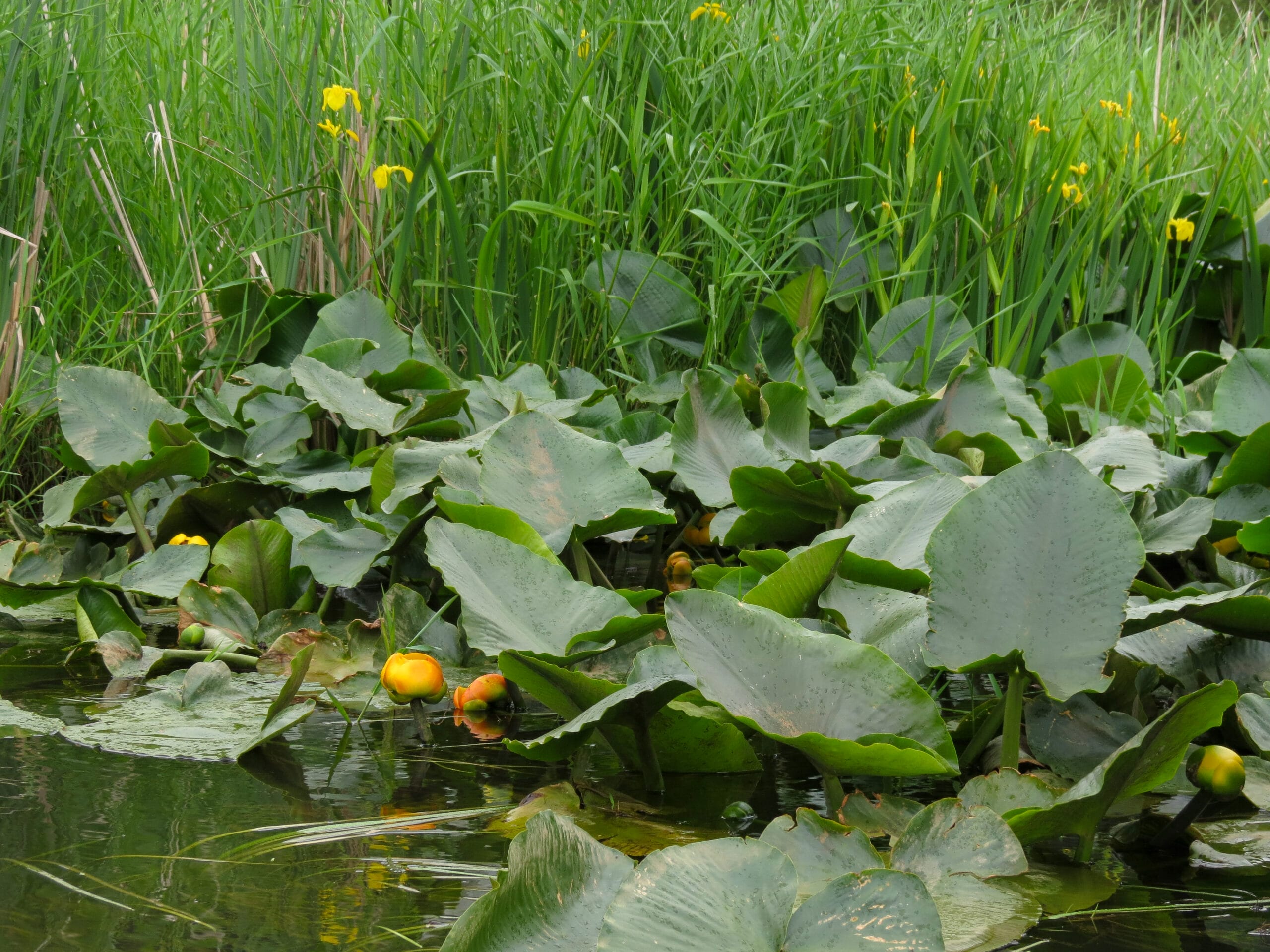
The Big Lake Wetlands Conservation Area protects some of the largest remaining wetlands in the Nookachamps watershed, formed where Lake Creek enters Big Lake. The Conservation Area plays an important role by preserving land for standing surface water, water filtration and habitat, as well as serving as a critical recharge zone for groundwater. The water levels of Big Lake fluctuate seasonally.
The combination of extensive wetlands, abundant native vegetation, and the numerous braided creeks running through the Conservation Area, provide breeding and feeding areas for numerous migratory and resident birds and waterfowl species.

The wetland area provides habitat for several species listed under the Endangered Species Act in Washington State including bull trout, cutthroat trout, coho salmon, and rainbow trout.
The Conservation Area is surrounded by agricultural and rural residential lands, with forest lands to the east and west. The community of Big Lake lies to the north, and development surrounds the majority of Big Lake. Historical aerial photography suggests that the property that comprises the Big Lake Wetlands Conservation Area has never been developed, beyond a small boardwalk that has since been removed.
Amphibian Monitoring

A large portion of the wetland is classified as an at-risk ecosystem in Washington State. In 2014, Skagit Land Trust began a citizen science program monitoring the concentration and diversity of amphibians at several properties with wetland habitat. Amphibian monitoring in Big Lake Wetlands began in 2017.
Access
Skagit Land Trust only allows limited low-impact public access. Currently there are no developed access points; accessing the Conservation Area by foot is challenging due to thick vegetation and deep channels and pools. It is possible to visit the Conservation Area’s shoreline via boat.

How to Get There
The nearest boat launch is the Washington Department of Fish and Wildlife boat launch at the midpoint of Big Lake, along Big Lake Road. There is no road access to Big Lake Wetlands Conservation Area.


You might also like

Big Lake Wetlands Protected as a Conservation Area
Skagit Land Trust purchases 67 acres of critical wetland habitat at the south end of Big Lake. At the intersection…
Read MoreBig Lake Wetlands Protected as a Conservation Area
Community Hikes at Yudwasta Big Rock Park
Despite light rain in the forecast, over 30 community members — many of whom had never been up to Big…
Read MoreCommunity Hikes at Yudwasta Big Rock Park
Kulshan Visits the Zoo
The Kulshan Creek Community Youth Group just traveled down south to visit the Woodland Park Zoo! Every year this field…
Read MoreKulshan Visits the Zoo