Partnering to Restore the Skagit
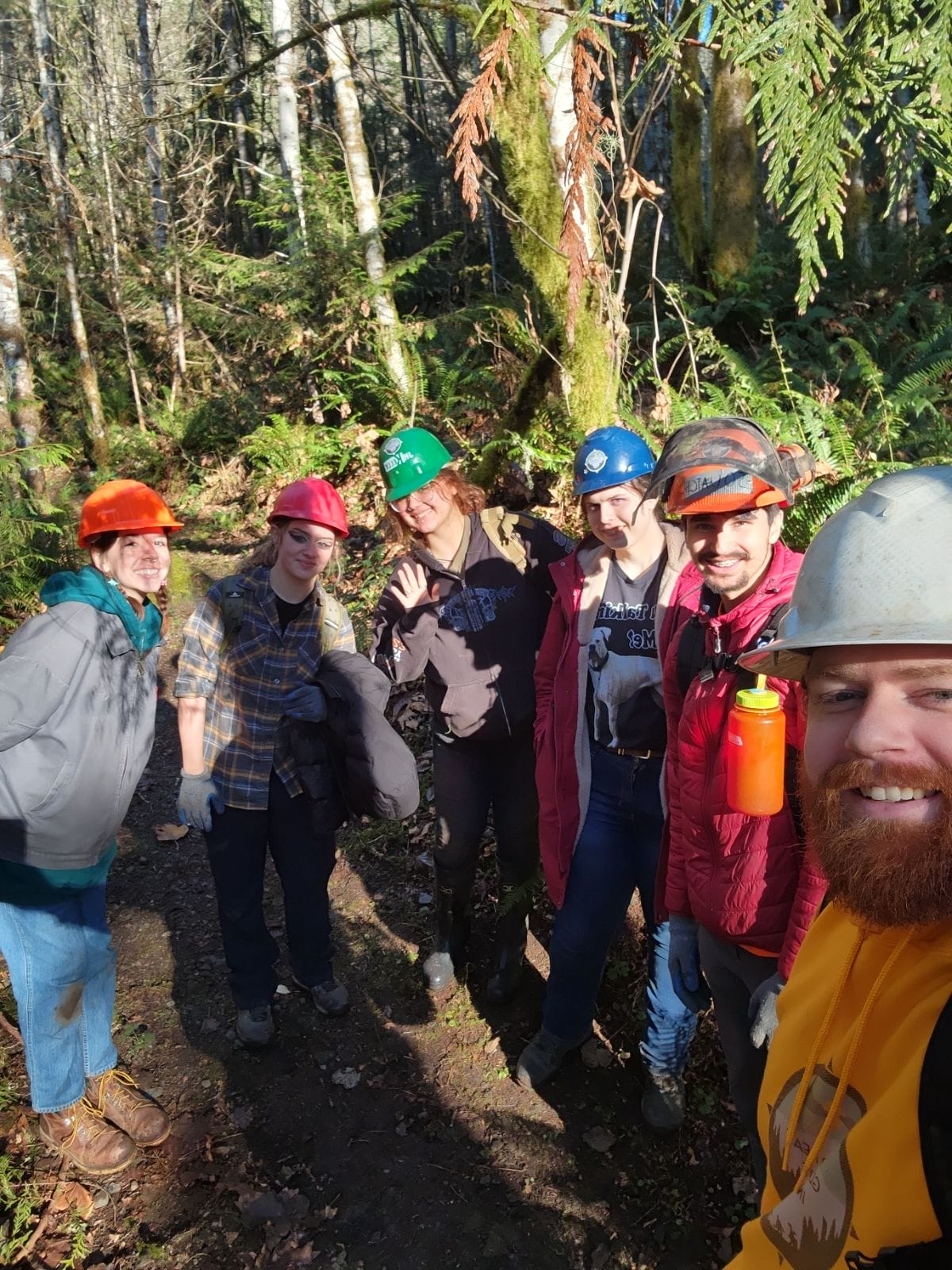
At Skagit Land Trust, we are fortunate to collaborate with dedicated conservation program partners who help us protect and restore Skagit County’s special places. This past year, work crews from EarthCorps, the Washington Conservation Corps (WCC), and Glacier Peak Institute (GPI) all added significantly to the amount of skilled stewardship work contributed to Skagit Land Trust lands.
EarthCorps

EarthCorps is an AmeriCorps program committed to developing the leadership skills and ecological restoration knowledge of young adults from across the U.S. and abroad. In 2024, EarthCorps supported us with 19 days of crew time across four Conservation Areas. Their teams focused on invasive species control, tackling blackberry at Hurn Field and garlic mustard at Pressentin Ranch and in areas along river shorelines.
Washington Conservation Corps

Washington Conservation Corps, another AmeriCorps program under the Department of Ecology, is one of Skagit Land Trust’s most consistent partners. In 2024, we were lucky to have 34 days of WCC crew time across seven of our Conservation Areas. WCC crews provide essential help with stewardship projects that require specialized skills, including stream shoreline restoration, invasive species removal, and trail work.
Glacier Peak Institute Work Force Program
This year, Skagit Land Trust also partnered with Glacier Peak Institute’s new workforce program. Funded by Snohomish County, this job training program provides young adults from the greater Darrington area with conservation skills and experience through hands-on work
opportunities with private conservation organizations, the Forest Service, and local tribes. In 2024, GPI contributed nine days of crew time to three of our Conservation Areas, where they supported projects such as blackberry removal at Utopia and trail maintenance at Barr Creek.

Partnership Is Mutually Beneficial
EarthCorps, WCC, and GPI crews have brought valuable skills, energy, and passion to work as they help us address a wide range of ecological challenges. Given that the Trust manages thousands of acres of land with a stewardship staff of three, our partners’ contributions also make our stewardship workload much more sustainable.
The opportunity for our staff to mentor the crew and share career insights is also an important part of these partnerships. WCC’s Crew Supervisor, Erika, told us: “It’s been great to work with an organization that understands the educational aspect of WCC, and takes the time to teach the members about the organization’s mission and why projects matter.” By providing this hands-on training in beautiful natural settings, SLT helps to inspire and support the next wave of conservation professionals.