Wrapping Mount Vernon in Green: A Growing Corridor of Protection
Skagit Land Trust (the Trust) and many partners have spent decades protecting lands at the edges of our cities and towns, where urban areas meet rural landscapes. As cities grow and become denser, these open spaces and wildlife corridors provide important connections between lands and waters that sustain a web of life. They keep our communities green, give people easy access to nature, and help wildlife move safely between habitats. These emerald ribbons of protected habitat also help cool our cities, manage stormwater, and improve air quality.
Two recent conservation successes in the Nookachamps Valley have permanently protected key parts of this corridor around the City of Mount Vernon. The Big Rock County Park expansion and a new conservation easement on the north edge of town add to places already protected in this corridor, such as Barney Lake.

Yudwasta Big Rock County Park
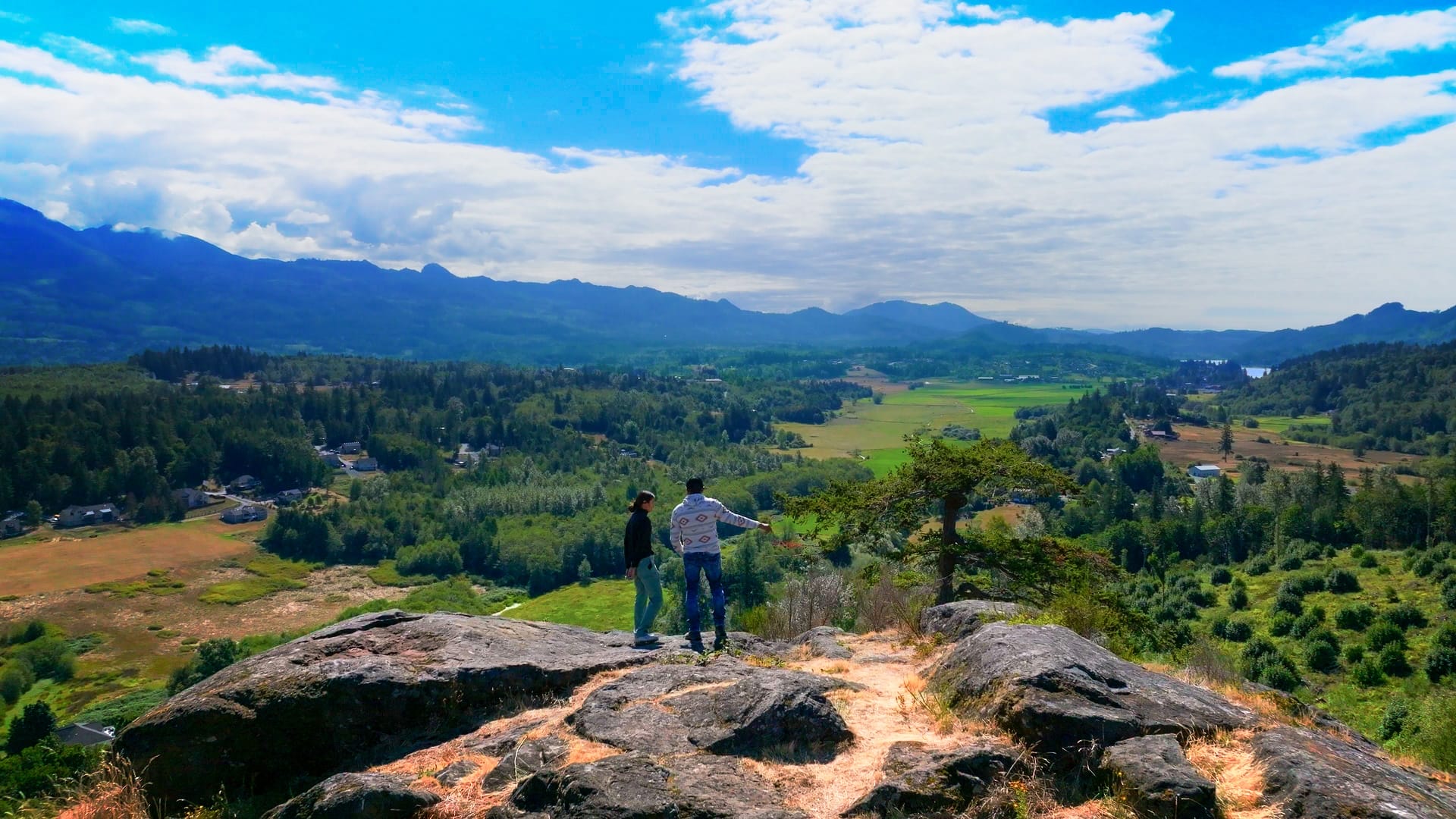
Known to the Upper Skagit People as Yudwasta, meaning “of the heart” Big Rock has always been more than a scenic landmark on the edge of Mount Vernon. It is a place where generations of people have formed lasting connections with the land. Big Rock also lies at the heart of a vital wildlife and open space corridor running north to south along Nookachamps Creek.
In January, the permanent protection of that corridor advanced significantly when Big Rock County Park expanded by 83 acres, thanks to a successful partnership between Skagit County Parks, Skagit Land Trust, and private landowners Ellen Rak and Bill Dunlap. The project was supported by hundreds of Skagit Land Trust members, the Upper Skagit Indian Tribe, Skagit County Commissioners, neighbors, as well as local businesses and organizations. Skagit County Parks Director Brian Adams expressed his excitement: “ln all the years we have partnered with Skagit Land Trust in preserving lands for the public, this is perhaps our greatest success story.”

Big Rock’s cultural importance helped to make the project a success. Policy Representative for the Upper Skagit Indian Tribe’s Natural & Cultural Resources, Scott Schuyler (pictured above with his daughter), supported the grant application. He shared with state reviewers the deep historical and ongoing connection between the Upper Skagit People and Yudwasta. The future park will honor this legacy by highlighting Indigenous history and continued relationship with the land.
The park’s more recent conservation story began in 1996 when Skagit Land Trust facilitated Dr. Richard and Holly Hoag’s donation of 13 acres of land (and a conservation easement to protect it) at the top of Big Rock. About 15 years ago, however, public access to the park was lost over the surrounding private property. Over the decades, Skagit Land Trust and Skagit County Parks looked for ways to reopen and expand the park. In 2023, when 63 acres of land adjacent to Big Rock Park went up for sale, both organizations recognized a rare opportunity to protect a beloved and culturally and ecologically significant landscape before it was lost. Acting quickly, Skagit Land Trust took a risk to acquire the property and hold it until the County could assume ownership. The Trust covered the $1.8 million purchase using organizational funds and a loan from the Washington Opportunity Fund. The Trust also committed to raise additional funds to help make the purchase affordable for County Parks.
With the land secured, Skagit County Parks pursued state funding. The project was awarded a $1 million grant from Washington State’s Recreation Conservation Office, which ranked the project #1 out of 64 applications statewide in the local parks category. The County also contributed $400,000 of its own funds. Lastly, the Trust was able to absorb over $400,000 of the final cost due to donations from 350 Skagit Land Trust families and businesses.
Community voices strengthened the project’s grant application. Local organizations such as SeaMar Community Health Centers spoke about the health benefits of expanded nature access for east Mount Vernon’s growing and diverse neighborhoods. SeaMar affirmed that nearby open space is essential to wellbeing, and neighbors agreed.

“People need a place to get out into nature and enjoy it,” says park neighbor Bill Dunlap. “The hope is that if they enjoy it, they’ll be motivated to protect it, too.” Inspired by these values, Bill and his wife Ellen Rak (pictured above) donated 20 acres of wildlife habitat they owned adjacent to the expanded park. Their parcel includes a portion of Gribble Creek, where Coho return each year. Black bears, coyotes, otters, and other wildlife also pass through the property frequently. “There’s often a tension between protecting wildlife and creating access, but the Trust walks that line well,” says Ellen. “Projects like this create ways for people to coexist with all the other beautiful parts of life.”
With the transfer of land from the Trust, and the neighbors, Skagit County will be reopening a much-expanded Yudwasta Big Rock County Park to the public soon.
Further Protection in the Nookachamps
Nearby, another project recently strengthened protection of this wildlife corridor. This past November, Diane and Mark Studley (pictured below with their daughter Alison) generously donated a Conservation Easement that permanently protects 26.3 acres of forest, agricultural land, and seasonal wetlands overlooking the Nookachamps and Skagit River floodplain.

The easement extinguishes three development rights and ensures that this highly scenic property – which is part of the view as one
enters Mount Vernon on Francis Road – will remain open and undeveloped.
The Studleys’ desire to protect this special place goes back a long way. “Fifty years ago, when driving from Sedro Woolley to Mount Vernon, we fell in love with a former dairy farm which sat above the flood plain,” Diane recalls. “That is where we raised our family and where our grandchildren now play. With Skagit Land Trust Conservation Easements, we know the land will be protected so that people, as they drive into town, will always enjoy that viewscape and the birds it attracts.”
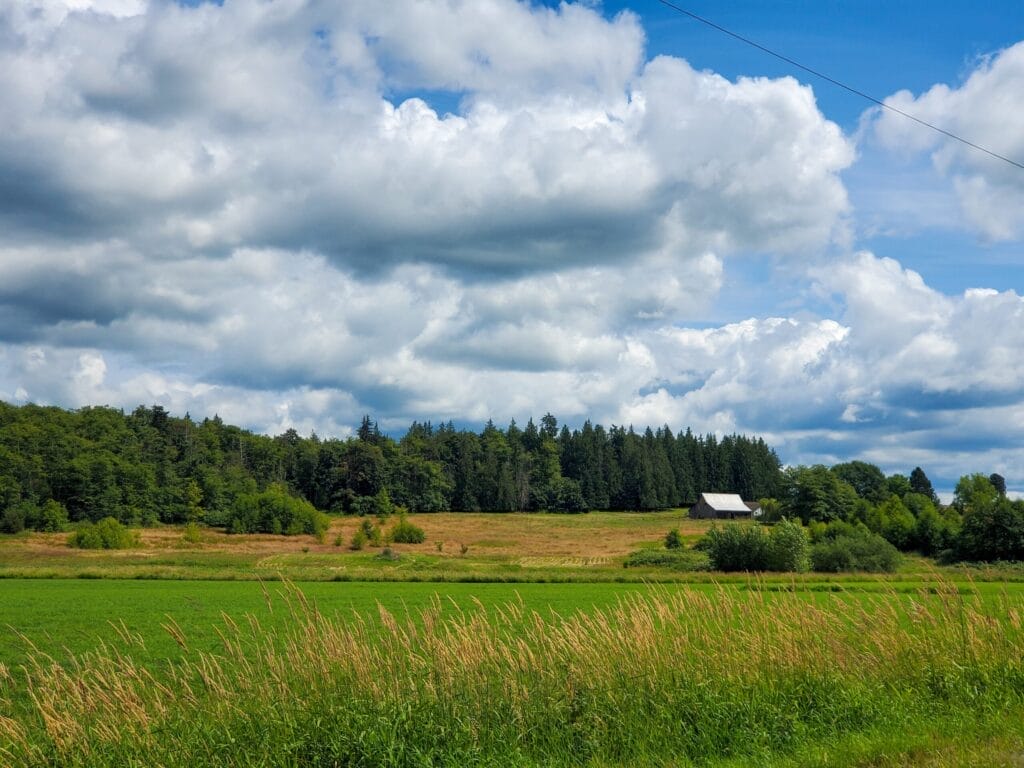
The conservation easement is designed to support both habitat and agriculture. A 7.2-acre Habitat Conservation Zone includes
mature forest and formerly open fields now transitioning to forest. Exceptionally well cared for by the Studleys, the forested section offers important habitat, particularly for birds – including an owl pair that nests in the Studleys’ barn.
The property also includes a 17.1-acre Agricultural Zone. As part of Skagit County’s agricultural legacy, these open fields contribute to the scenic, rural vistas that Skagit residents and visitors love. The remaining acreage includes a residential zone with a farmhouse, barns, and garden that anchor the property in its long history of land stewardship. This easement is not the first land donation by the Studleys. In 2024, Mark and Diane also donated 13 acres of adjacent land to Skagit County Parks. Skagit Land Trust connected the Studleys with County Parks staff and organized the first site visit, helping to move the park donation forward.
With both of these places now permanently protected, the open space and wildlife corridor around Mount Vernon continues to grow as a legacy for all generations of people and wildlife. Thank you to our members, private landowners, and community partners for your commitment to preserving the natural, rural character of Skagit County.
